Migration Theories Explained
For thousands of years before Europeans arrived, millions of Indigenous peoples lived across the Americas, speaking hundreds of languages and building diverse cultures. But that leads to a big question:
How did the very first Americans get here in the first place?
Scientists, archaeologists, and Indigenous communities have explored this story using climate data, artifacts, DNA evidence, and oral traditions passed down for generations. Today, historians don’t see just one answer—there are several possible migration routes and timelines.
This article explains the major ideas about how people first reached the Americas, how Ice Age conditions shaped migration, and how Indigenous origin stories offer their own perspectives on human beginnings.
The Ice Age and Why It Mattered
During the last Ice Age (also called the Late Pleistocene), North America looked nothing like it does today.
- Huge ice sheets covered Canada
- Sea levels were 300+ feet lower
- Colder temperatures created new environments
- Many ancestors of today’s Indigenous peoples were living in northeastern Asia
These Ice Age conditions helped open—and sometimes close—possible migration routes into the Americas.
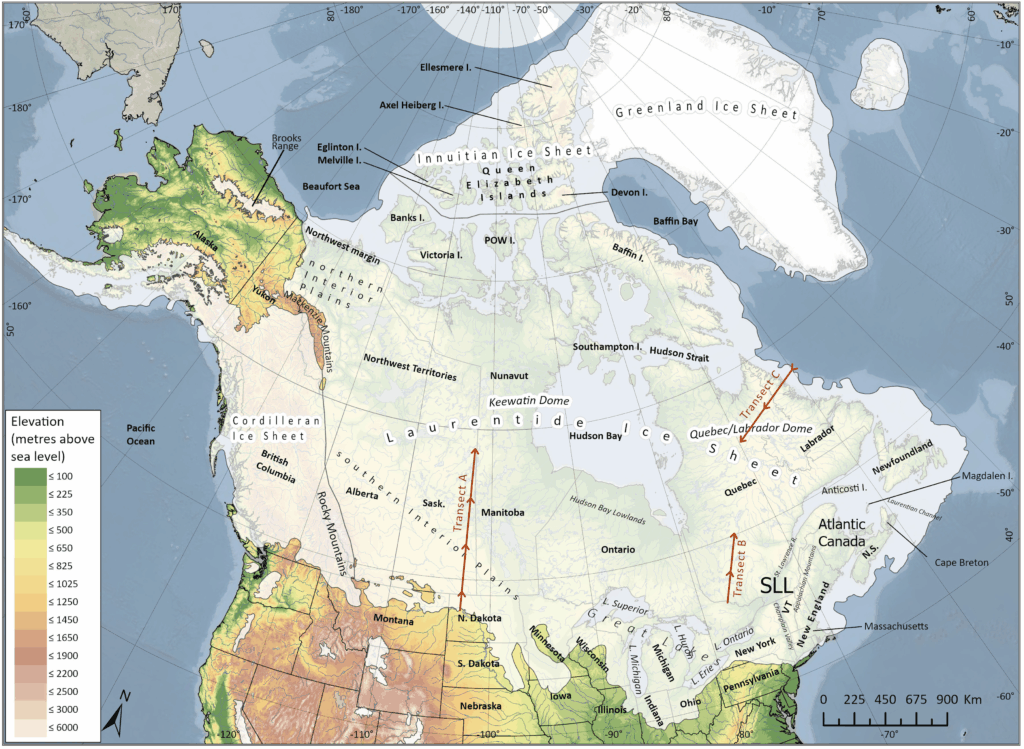
Lower Sea Levels=New Land Appears
When sea levels dropped, land that is underwater today became exposed. One of the most important exposed regions was Beringia, the landmass that once connected Asia and North America. Scientists studying sea levels and ancient shorelines confirm this land was exposed during the Ice Age (Lesnek et al., 2023; PMC).
Shifting Ice Sheets
Two enormous ice sheets—the Laurentide and the Cordilleran—covered most of Canada. At times they completely blocked inland travel. As the climate warmed and the ice melted, openings and corridors appeared.
Migration “Windows”
New research shows that people may have moved into the Americas during certain climate-friendly “windows,” like:
- 24,500–22,000 years ago
- 16,400–14,800 years ago
(University of Oregon News, 2023)
These environmental clues help explain why multiple migration theories exist—not just one.
🐾 The Beringia Land Bridge Theory
For decades, the most widely taught explanation was the Beringia Land Bridge Theory.
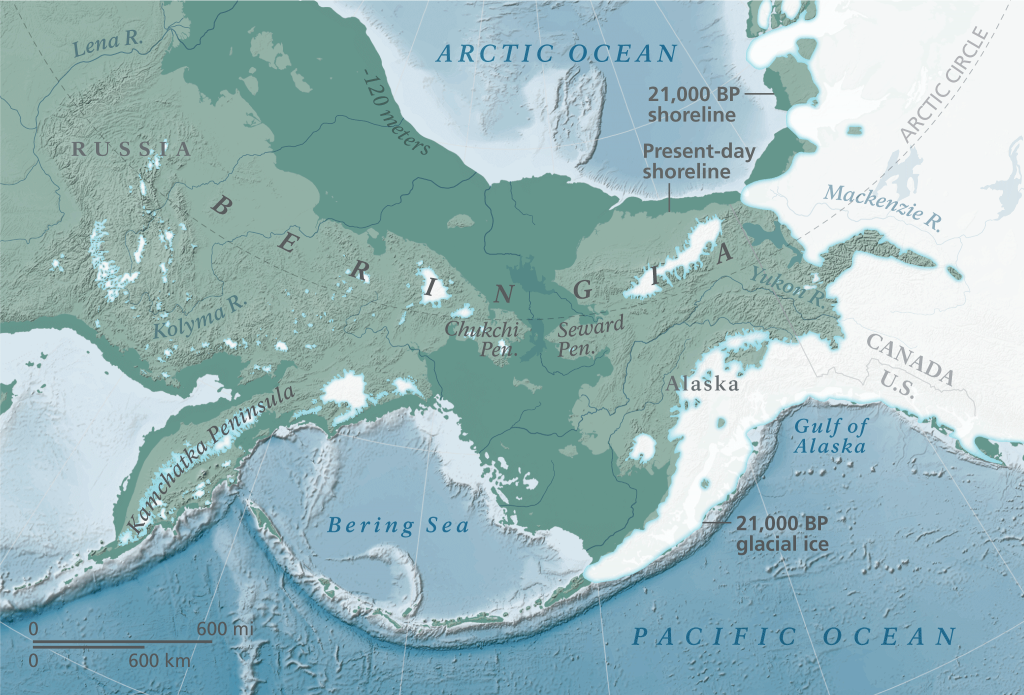
What Was Beringia?
Think of Beringia as a HUGE grassland region—full of mammoths, bison, caribou, and plants. It wasn’t a skinny “bridge,” but a massive homeland where people could live for thousands of years.
Genetic and archaeological studies show strong links between ancient Siberian peoples and the earliest peoples of the Americas (Graf et al., 2017).
How People May Have Traveled
- Following large animals into Beringia
- Living there for thousands of years
- Moving into North America as the ice melted
Evidence That Supports This
- Geological research confirms Beringia existed (National Park Service)
- DNA studies show connections between Siberian ancestors and Indigenous peoples of the Americas
- Ice-sheet modeling shows possible interior travel corridors
However, scientists discovered that the interior “ice-free corridor” may not have opened early enough. Some early archaeological sites may be older than the corridor itself—meaning there must have been other ways in.
The Coastal Migration Theory
Research in recent decades has given new attention to the coastal migration theory, which argues that the first Americans traveled along the Pacific coastline instead of through the interior.
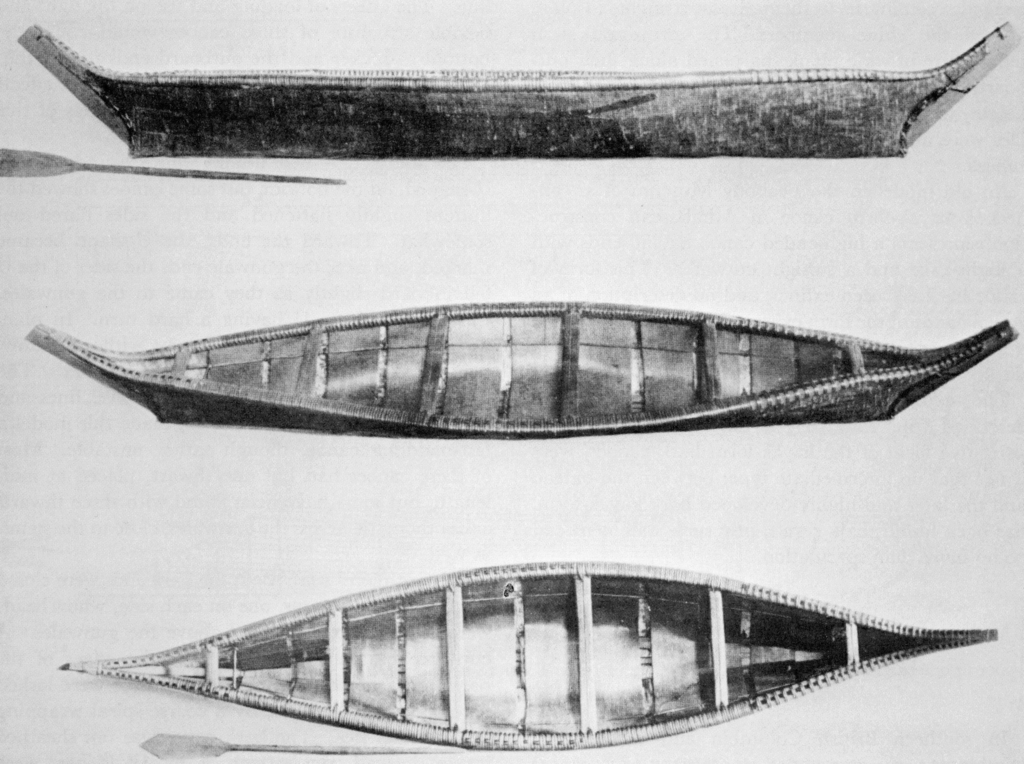
How the Coastal Route Worked
- People traveled by walking along the shore, by boat, or both.
- Coastal waters provided steady food such as fish, shellfish, sea mammals, and seaweed.
- Bays, estuaries, and coves offered places to stop and rest during long journeys.
This food-rich coastline may have acted like a prehistoric “highway.”
Evidence Supporting Coastal Migration
- Oceanographic studies show that the Pacific coastline had areas of open water and rich marine resources during the Late Pleistocene (Erlandson & Braje, 2017; Oceanography).
- South American archaeological sites show early human presence that may predate the opening of the inland ice corridor (Smithsonian Magazine, 2019).
- Many ancient coastal sites are now underwater due to rising sea levels, meaning evidence is slowly being uncovered through underwater archaeology.
The coastal route helps explain how people could have reached southern parts of the Americas earlier than the land-bridge-only model suggests.
The Pacific Kelp Highway Hypothesis
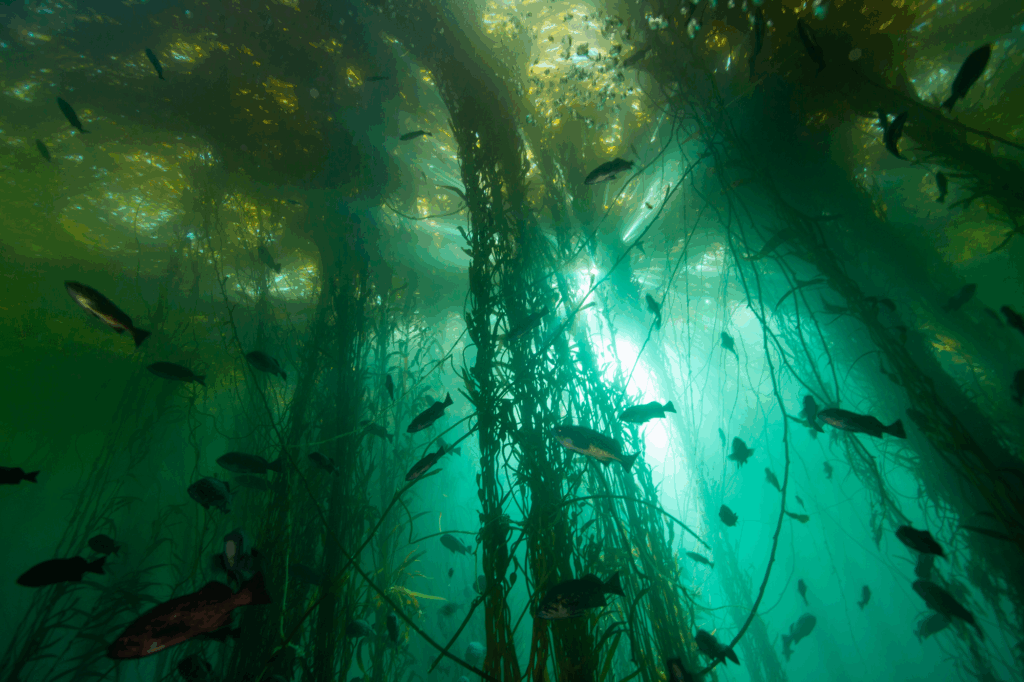
A more specific version of the coastal idea is the Pacific Kelp Highway Hypothesis. This model suggests that people migrated along a continuous band of kelp forests stretching from northeastern Asia to Alaska and down the Pacific coast.
Why Kelp Forests Matter
Kelp forests are some of the most productive ecosystems on Earth. They support fish, shellfish, sea otters, birds, and other marine life. For migrating groups, these ecosystems would have provided:
- Reliable, easy-to-find food sources
- Calm, sheltered waters
- Predictable seasonal resources
- A clear natural route to follow along the coastline
Evidence for the Kelp Highway
- Marine ecology studies show these kelp ecosystems existed along the Pacific Rim during potential migration periods (UWM CLACS).
- Archaeological research highlights the likelihood that coastal peoples could have traveled using simple boats or rafts (National Geographic Education Blog).
- Early coastal sites found in North and South America support the possibility of very early human occupation along the shoreline.
Because many early coastal landscapes are submerged, evidence has been harder to recover—but research continues.
✨ Indigenous Origin Stories
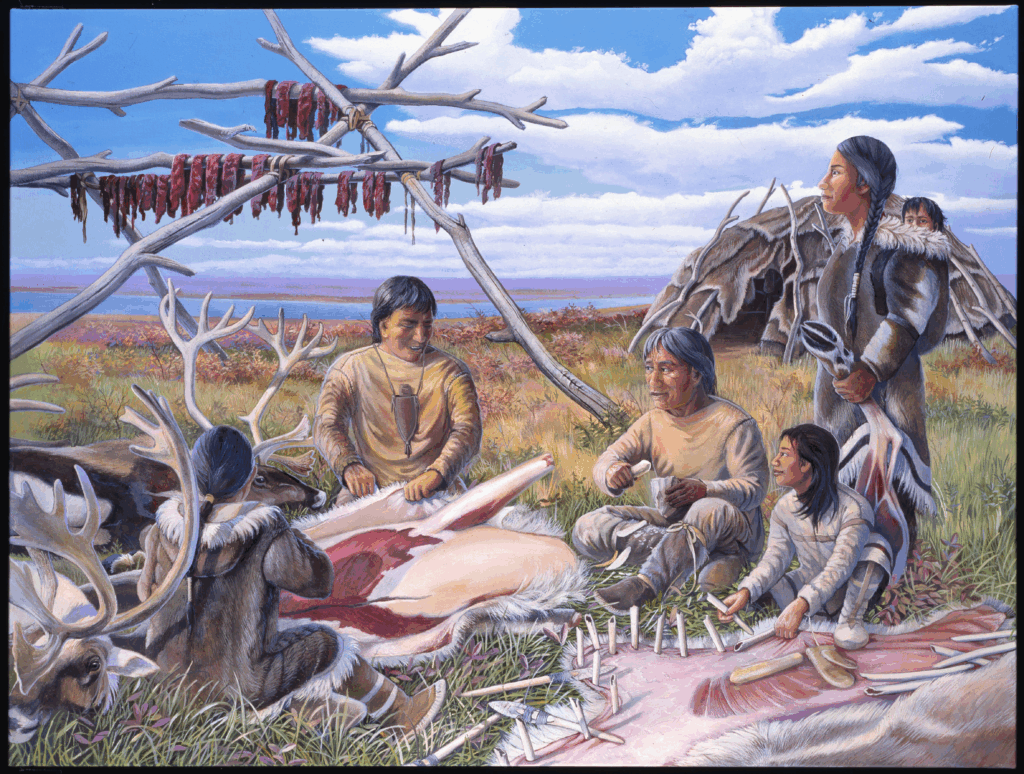
In addition to scientific theories, Indigenous communities across the Americas have their own stories about how their ancestors came to be. These are not scientific hypotheses—they are cultural histories passed down through oral tradition.
What These Stories Describe
Different nations may describe:
- Emerging from the earth
- Journeying across water
- Being placed in the world by spiritual beings
- Moving to a homeland promised by ancestors
Why These Stories Matter
- They express identity, culture, and connection to the land.
- They have been preserved through generations of storytelling.
- They offer insight into how communities understand their own origins.
Indigenous origin stories do not need to match scientific timelines to be meaningful. They represent a different kind of knowledge—one that is cultural, spiritual, and central to community identity. They are their own form of knowledge, just as important to understanding human history
.
🧭 So…What Do We Know Today?
There is no single story of the first Americans. The evidence suggests:
- Multiple migrations, not one
- Multiple routes—land, coast, boats, or a combination
- Different timelines, depending on climate
- Indigenous perspectives that deepen our understanding
Archaeology, genetics, oceanography, and Indigenous oral histories all add pieces to a giant puzzle that researchers are still solving.
As underwater archaeology and climate science advance, our picture of early American history becomes clearer every year.
Sources
- Erlandson, J. M., & Braje, T. J. (2017). An Oceanographic Perspective on Early Human Migrations to the Americas. Oceanography. https://tos.org/oceanography/article/an-oceanographic-perspectiveon-early-human-migrations-to-the-americas
- UWM Center for Latin American & Caribbean Studies. Did the First Americans Take a Ride on the Kelp Highway? https://uwm.edu/clacs/did-the-first-americans-take-a-ride-on-the-kelp-highway
- National Geographic Education Blog. Did the First Americans Take a Ride on the Kelp Highway? https://blog.education.nationalgeographic.org/2017/11/08/did-the-first-americans-take-a-ride-on-the-kelp-highway
- University of Oregon News. New Data Suggests a Timeline for the Arrival of the First Americans. https://news.uoregon.edu/content/new-data-suggests-timeline-arrival-first-americans
- Smithsonian Magazine. New Evidence Shows That Humans Could Have Migrated Along the Coast. https://www.smithsonianmag.com/smart-news/new-evidence-shows-first-americans-could-have-migrated-along-coast-180969217
- Graf, K. E., et al. (2017). Human Dispersal from Siberia to Beringia: Assessing Routes and Chronologies. Journal of Anthropological Research. https://www.journals.uchicago.edu/doi/full/10.1086/693388
- National Park Service. The Bering Land Bridge Theory. https://www.nps.gov/bela/learn/historyculture/the-bering-land-bridge-theory.htm
- Lesnek, A. J., et al. (2023). Windows of Opportunity for the Peopling of the Americas. PMC. https://pmc.ncbi.nlm.nih.gov/articles/PMC10013856