Step back in time about 13,000 years. The world is colder. Sea levels are much lower. Giant sheets of ice cover huge parts of Canada. And across the frozen grasslands of North America, enormous animals—mammoths, saber-toothed cats, giant sloths—still roam.
This was the world of the Paleo-Indians, the earliest known peoples of the Americas.
They lived in an environment full of danger, opportunity, and constant change.
But they weren’t “cavemen.” They were expert problem-solvers, incredible hunters, and highly adaptable travelers who found ways to thrive in a world much tougher than ours.
This lesson explores what their daily life was really like, the impressive technologies they created, how they hunted huge Ice Age animals, and what happened to those megafauna.
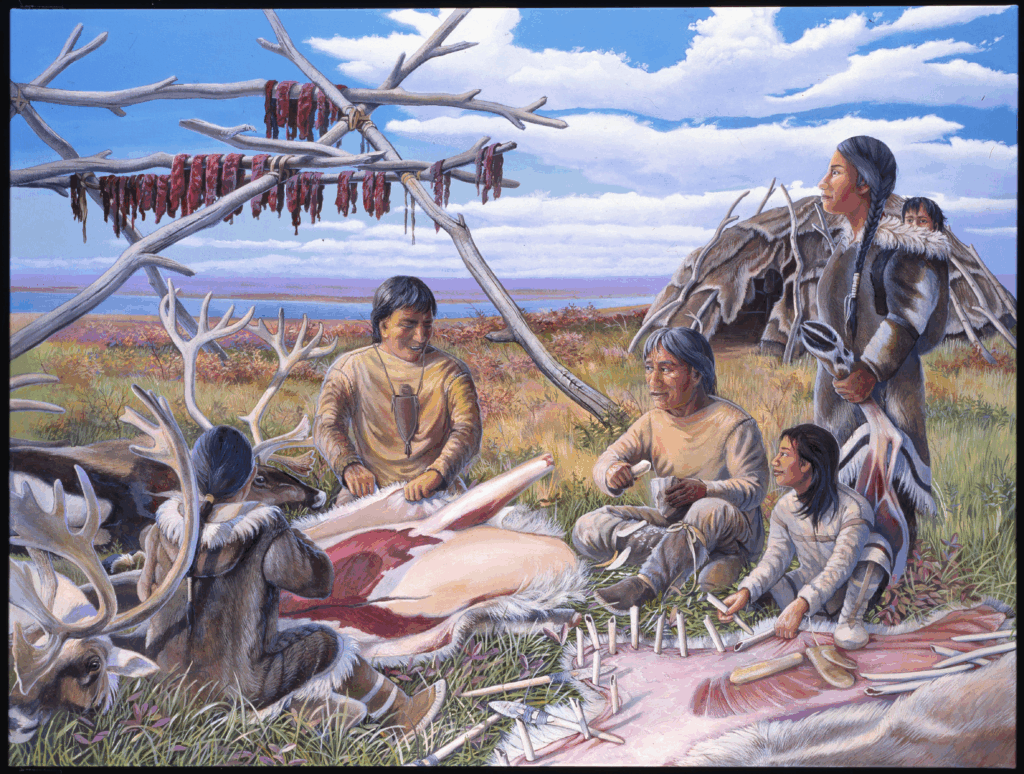
Daily Life of Paleo-Indian Peoples
To understand Paleo-Indian life, imagine living without permanent houses, grocery stores, or even a fixed home base. Instead, life was organized around the seasonal rhythms of nature.
A World on the Move
Most Paleo-Indian groups lived in small, flexible bands—maybe 20 to 50 people—who moved with the seasons. When herds migrated south, they followed. When plants ripened or berries grew, they camped nearby. When winter closed in, they sought sheltered valleys, caves, or rock overhangs.
Moving frequently didn’t mean they lacked structure. Campsites were carefully chosen for safety, wind protection, access to water, and availability of resources. Archaeologists have found traces of hearths, tool-making areas, sleeping spots, and hide-processing stations—even in temporary camps. (Encyclopedia of Alabama)
Clothing, Shelter, and Fire
Survival required warm clothing, especially in regions close to the ice sheets. Animals provided almost everything:
- Hides for clothing, shelter, bedding, and bags
- Sinew (animal tendon) for thread
- Bone and antler for tools
Paleo-Indian clothing was carefully sewn using bone needles—powerful evidence of planning and craftsmanship.
Fire was essential for warmth, cooking, toolmaking, and protection from predators. The glow of a campfire meant survival.
🍖 What Did Paleo-Indians Eat?
While Hollywood often imagines Paleo-Indians eating nothing but mammoth steaks, the reality was far more diverse. They ate whatever the environment offered:
- Deer, caribou, and other mid-sized animals
- Fish, turtles, and waterfowl
- Nuts, roots, fruits, and berries
- Rabbits and small mammals
(Hill, Early Paleoindian Subsistence Strategies in Eastern North America)
Far from being “just big-game hunters,” they were flexible and resourceful. This diversity helped them survive environmental changes.
Tools and Technology: Engineering the Ice Age
Paleo-Indian technology was sophisticated, portable, and purpose-built for life on the move.
Stone Tools: Engineering Meets Art
If you picture a typical “caveman” tool, erase it. Paleo-Indian stone tools—especially Clovis-style points—were masterpieces of precision.
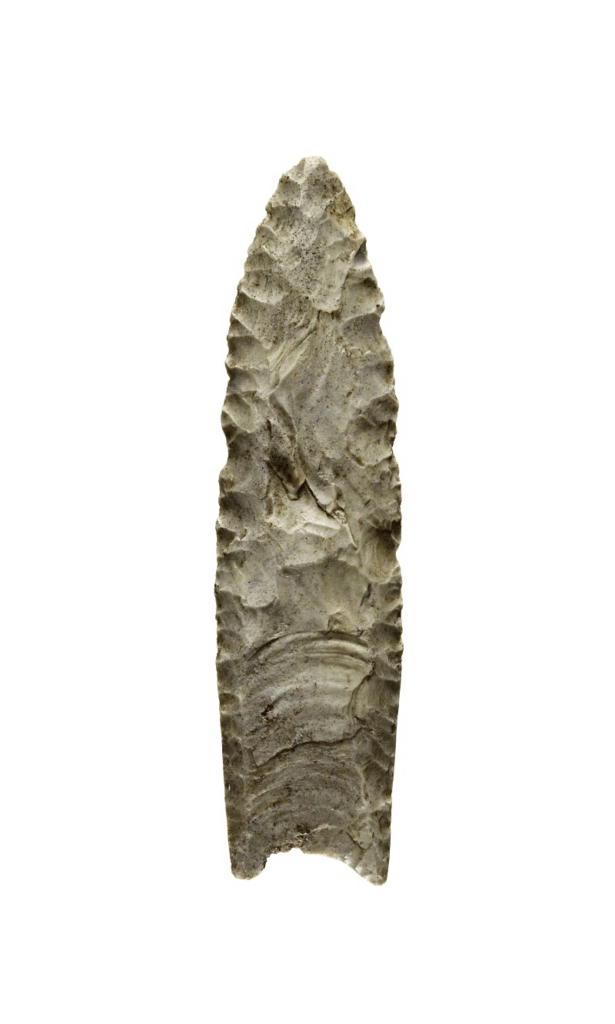
A Clovis point:
- Was carefully shaped from high-quality stone
- Had a long flute (groove) to make hafting easier
- Required expert knowledge of stone angles and fracturing
- Was used for hunting large animals
(Encyclopedia of Arkansas)
Some stones used for tools came from over 300+ miles away, meaning people either traveled long distances or traded widely. That level of mobility is astonishing.
Other stone tools included
- blades and microblades
- scrapers for hides
- knives for butchering
- burins for carving bone and antler
- drills for piercing leather and wood
These weren’t crude survival tools—they were evidence of a mature technological tradition.
Bone and Antler: Lightweight and Durable
Stone wasn’t the only material in their toolkit. Bone and antler were used for:
- awls for sewing
- needle-sharp points
- spear shafts
- hide-scrapers
- ornaments and symbolic items
Because these materials decay easily, fewer survive—but the ones we do find show high craftsmanship.
Hunting Strategies: Taking on Giants
Hunting in the Ice Age required intelligence, cooperation, and the ability to “read” the landscape.
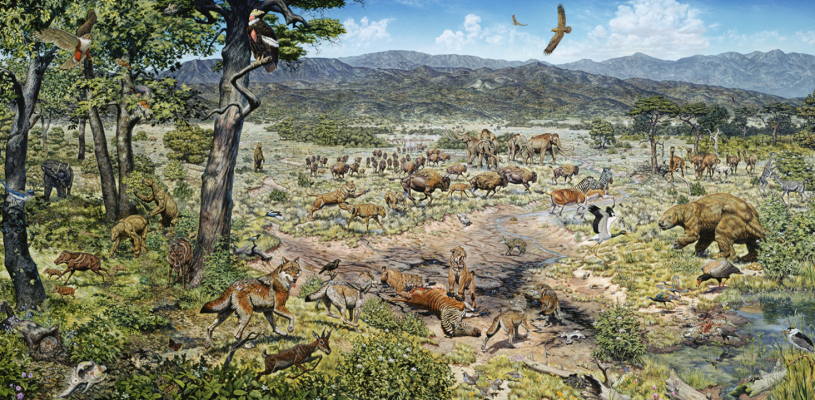
Facing the Giants
Imagine confronting a 10-foot-tall mammoth weighing up to 6 tons. These were dangerous animals, capable of crushing hunters and overturning trees. But for Paleo-Indians, they were walking treasure chests of food, clothing, tools, and shelter.
A single kill provided:
- Meat for weeks
- Fat for cooking and fuel
- Hides for clothing and tents
- Bones for tools
- Sinew for thread
(First Peoples in a New World, UC Press)
Hunting wasn’t random. It required deep knowledge of how herds moved, where they watered, how they reacted to weather, and which landscapes created natural traps.
Strategy and Skill
Evidence suggests Paleo-Indians used techniques like:
- Driving animals into ravines, marshes, or narrow passes
- Ambush strategies where hunters waited at predictable crossing points
- Stealth movement to get close enough for spear thrusts
- Atlatl-assisted throws in later periods (not universal among early Paleo-Indians)
On the Great Plains, hunters may have guided bison into kill zones using lines of people, fire, or natural barriers.
(Encyclopedia of Arkansas)
Adapting to a Changing World
When mammoth and mastodon populations began to drop, Paleo-Indians didn’t vanish—they changed. They switched to hunting smaller animals, expanded their plant gathering, and developed new tool types.
Adaptability was their greatest strength.
Extinction of the Megafauna
Between about 13,000 and 10,500 years ago, most of North America’s megafauna disappeared. Mammoths, giant sloths, saber-toothed cats, Ice Age horses, ancient camels, and giant beavers all vanished forever.
What Caused the Extinction?
Scientists point to several overlapping forces:
1. Rapid Climate Change
At the end of the Ice Age, temperatures rose sharply. Grasslands shrank. Forests expanded. Water sources changed. Many megafauna species were highly specialized for cold environments and simply couldn’t adapt.
(First Peoples in a New World, UC Press)
2. Human Pressure
Even low levels of hunting could have tipped fragile populations into decline. Paleo-Indians were highly skilled hunters, and megafauna with slow reproduction rates were vulnerable.
(National Humanities Center)
3. Ecological Shifts
Changes in vegetation, fire patterns, and predator dynamics reshaped ecosystems. Some species may have lost the specific habitats they needed to survive.
(Mann et al., 2015, PMC)
Most scientists now agree that the extinction wasn’t caused by a single factor. It was the result of climate change + human hunting + ecological stress working together.
(PMC; Encyclopedia of Arkansas)
A Turning Point
The disappearance of megafauna changed everything. Without giant prey animals, Paleo-Indians expanded their diets, diversified their tools, and began experimenting with new ways of living. These changes helped set the stage for later innovations in hunting, gathering, and eventually agriculture.
Summary
Life in the Ice Age demanded resilience. Paleo-Indians lived in a world of ice and giants, using advanced tools, careful planning, and deep environmental knowledge to survive. They hunted enormous animals, traveled long distances, and adapted their lives as climates changed. When the great megafauna disappeared, they transformed their ways of living—and their descendants built the foundations of thousands of Indigenous cultures across the Americas.
Sources
- Mann, D.H., et al. (2015). Life and Extinction of Megafauna in the Ice-Age Arctic. PMC. https://pmc.ncbi.nlm.nih.gov/articles/PMC4655518/
- First Peoples in a New World: Colonizing Ice Age America. University of California Press. https://content.ucpress.edu/chapters/10794.ch01.pdf
- National Humanities Center. “Paleoindians and the Great Pleistocene Die-Off.” https://nationalhumanitiescenter.org/tserve/nattrans/ntecoindian/essays/pleistocene.htm
- Encyclopedia of Alabama. “Paleoindian Period.” https://encyclopediaofalabama.org/article/paleoindian-period/
- Hill, M.E. “Early Paleoindian Subsistence Strategies in Eastern North America.” ResearchGate.
- Encyclopedia of Arkansas. “Paleoindian Period.” https://encyclopediaofarkansas.net/entries/paleoindian-period-541/
“Ancient Tools: Searching for the First Americans.” SC Sea Grant. https://www.scseagrant.org/ancient-tools-searching-for-the-first-americans/